According to the Oxford English Dictionary, bonkers means:
“Of a thing, situation, etc.: mad, crazy; ludicrous, ridiculous; wacky.”
There are ways of going bonkers that lose the world, and ways of going bonkers that find a larger world. Mysticism, at its healthiest, belongs to the second kind. The holy fool traditions of Christianity, ecstatic dancing, Sufi poetry, Zen paradoxes, the laughing mystics, shamanic practices, visionary experiences—these often deliberately disrupt ordinary patterns of thought. A mystic may appear irrational because they are resisting rigid habits of perception. From the outside they are going bonkers; from the inside they are attuned to something ultimate.
The difference lies not simply in whether ordinary boundaries are crossed, but in what emerges from crossing them. One can lose contact with reality by collapsing into fragmentation and confusion. But one can also loosen ordinary frameworks in order to encounter wider horizons of meaning, connection, and presence. Mystical traditions have long recognized that inherited habits of thought can become prisons, and that awakening sometimes requires a temporary undoing.
From a process perspective, mystical experience may involve the emergence of new forms of prehension—new ways of feeling and responding to the world. What appears to be disorder from the standpoint of conventional expectations may instead be a reorganization of experience around deeper patterns of relation. The self momentarily becomes more porous, more receptive, less tightly enclosed within familiar boundaries.
There is risk here, of course. Not every departure from ordinary consciousness is revelatory. Some forms of going bonkers diminish life, narrowing vision and severing relationships. But some forms enlarge life. They deepen compassion, awaken creativity, intensify love, and open a person to dimensions of reality that had previously gone unnoticed.
Perhaps healthy mysticism is a kind of divinely inspired bonkerdom—a venture beyond the familiar that does not end in chaos but in a wider harmony. From the outside, it may look strange. From within, it may feel less like losing oneself than finding oneself as part of something larger. It is not standing outside reality; it is standing outside a smaller picture of reality in order to enter a larger one.
The Metaphysics of Going Bonkers
To speak of going bonkers shifts attention from a quality to a process. We are no longer speaking simply of something being bonkers; we are speaking of a movement, a becoming, a way in which experience can take shape.
From a Whiteheadian perspective, going bonkers may not correspond to a single eternal object but rather to a complex of eternal objects—a pattern of pure potentialities involving excess, surprise, incongruity, unpredictability, absurdity, playfulness, disjunction, and intensity. These possibilities exist as potentials in the primordial nature of God, neutral in themselves and available for realization in countless forms.
The potentiality itself is neither good nor bad. Much depends on how it is actualized.
There are constructive forms of going bonkers:
a child disappearing into imaginative play
a jazz musician improvising beyond expectation
a comedian delighting in absurdity
a prophet disrupting stale conventions
an artist refusing ordinary boundaries
And there are destructive forms:
delusion severed from reality
violence and frenzy
cruelty untethered from empathy
forms of chaos that dissolve rather than create meaning
Thus there are many ways to participate in bonkerdom. Going bonkers is not simply losing order. It can also involve escaping rigid order. Sometimes life itself requires a temporary departure from ordinary patterns so that novelty can enter.
The metaphysical question is not whether the possibility of going bonkers exists. It does. The question is what kind of bonkers is being realized: whether the movement contributes to richer forms of harmony and intensity, or whether it fragments experience into destructive chaos.
This raises the further question of value. In Whitehead's philosophy, value can be understood as the enjoyment of richness of experience in the subjective immediacy of a moment. Understood this way, going bonkers can indeed be intrinsically valuable: it can be intensely enjoyable, exhilarating, liberating, and satisfying in its own right, even when it is destructive. A riot can feel exciting. A frenzy can feel intoxicating. An act of reckless abandon can possess a strange immediacy and zest. Destructive forms of bonkerdom may carry their own momentary satisfactions.
But Whitehead does not reduce value simply to isolated intensity. Higher forms of value involve contrasts held together in wider harmonies. They include concern for relationships, memory, consequences, and the well-being of others. In more developed forms of life, value becomes richer, not less rich, when enjoyment contributes to the flourishing of a larger community of life.
Thus there may be a difference between bonkersness as intensity alone and bonkersness woven into beauty. One can imagine a bonkerdom of cruelty, domination, and destruction, and also a bonkerdom of jazz improvisation, comedy, artistic experimentation, friendship, holy foolishness, and playful creativity.
Perhaps wisdom is not avoiding bonkersness altogether. Perhaps wisdom lies in participating in forms of bonkerdom that enlarge rather than diminish the richness of life around us. The aim would not be merely to enjoy intensity, but to enjoy it in ways that help others breathe more deeply into existence as well. Perhaps even God, understood as the lure toward richness of experience, is a friend to constructive bonkerdom. A universe capable of jazz, dreams, comedy, improvisation, and play may require it.
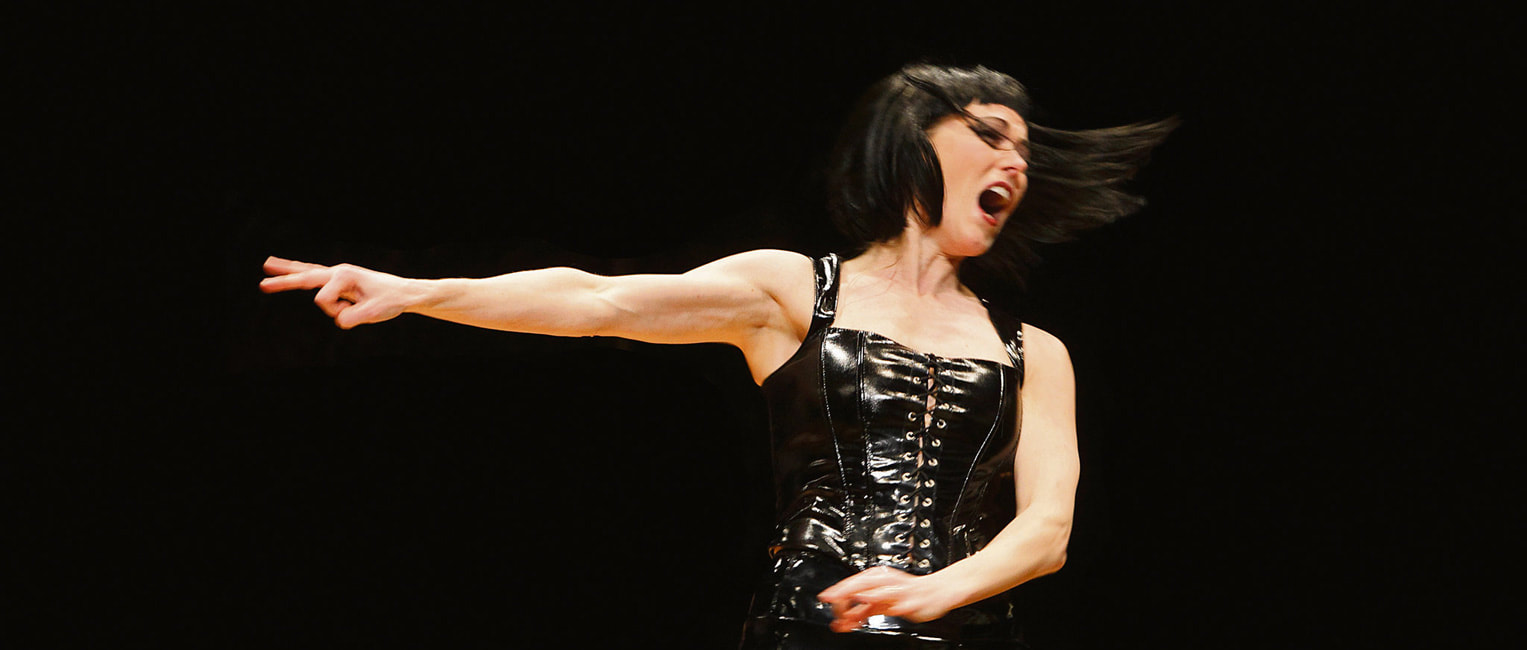
“The piece that raised this concert to an unforgettable climax was Mysteries of the Macabre, an arrangement of three soprano arias from György Ligeti’s Le Grand Macabre made by Elgar Howarth, who conducted the opera’s premiere in 1978. Dressed in dark wig, leather coat, fishnets and PVC, like a cross between Berg’s Lulu and Madonna, Barbara Hannigan both sang and directed in a tour de force of performance and vocal brilliance. It was just as well that it finished the evening: nothing played afterwards could have lived up to it.” Guardian, 02 December 2010
Ze-ro, zero! Birds on the wing! Ch-ch-ch-ch-ch! Double-you-see! Snakes in the grass! Rabble, rabble, rabble! Riot, riot! Too too too too too! Unlawful assemblies! Cha cha cha cha cha! Communal insurrection! Mutinous masses! Cha chee cho choo cha! Turbulence! Panic! Panic! Papapapa-panic! Groundless! Groundless! Phobia! Wide of the mark! Right off the track! Hypopo Hypopopopopopopata Hypochondria!